Most Airbnb hosts know they need a turnover clean between every stay. Far fewer have a plan for deep cleans. That oversight quietly degrades your property, and eventually your reviews.
A deep clean is not just a longer version of a standard turnover. It covers the things that accumulate invisibly over weeks of guest stays: limescale in the shower head, grease inside the oven door hinge, dust behind the fridge, mould tracking along the sealant in the bathroom, and grime in the grout between floor tiles. None of these show up on a guest's first look. All of them show up in a guest's third look.
What a Deep Clean Actually Covers
A proper deep clean for a short-let property should include everything in a standard turnover clean, plus:
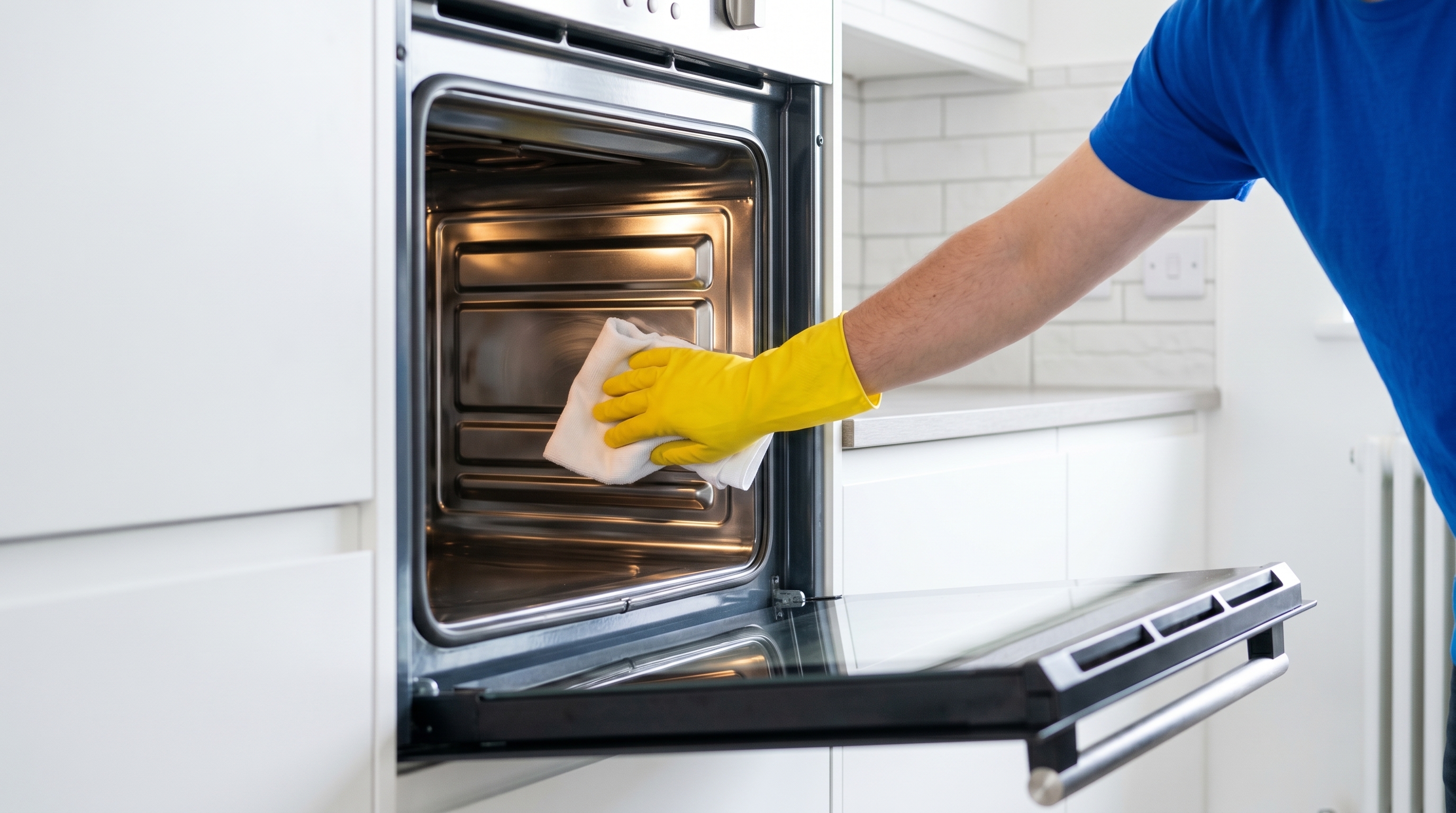
- Oven interior: full clean including racks, door seals, and the glass panel between the oven door layers
- Fridge and freezer: defrost if needed, wipe all shelves and drawers, check for expired items
- Behind and under appliances: pull out the fridge, washing machine, and dishwasher to clean underneath and behind
- Limescale treatment: showerheads, taps, toilet cistern, and any chrome fittings
- Grout and sealant: scrub tile grout, treat mould on bathroom sealant, replace sealant if it has gone black
- Windows: inside and outside if accessible, plus window tracks and frames
- Skirting boards and coving: dust and wash all skirting boards and light switches throughout
- Mattress and upholstery: vacuum mattresses, spot-clean soft furnishings, check for staining under mattress protectors
- Extractor fans and air vents: remove and clean covers, vacuum dust from inside
A standard turnover clean at a professional level takes one to two hours for a one-bed flat. A proper deep clean on the same property takes three to four hours.
How Often Should You Deep Clean?
The honest answer depends on your occupancy rate and property type. Here is a working framework:
Every 8–12 weeks for high-occupancy properties. If your property is booked more than 20 nights per month, the wear rate is close to a hotel. Professional hotels deep clean rooms on a 4–6 week rotation. For a short-let, every two to three months is the minimum standard.
Every 12–16 weeks for moderate-occupancy properties. If your average is 12–18 nights per month, a deep clean every quarter is appropriate. Many experienced hosts schedule one at the start of each season: spring, summer, autumn, and a pre-Christmas clean.
After every long stay. If a guest books for seven nights or more, treat the following turnover as a light deep clean. Long stays create more subtle wear: kitchen cabinets get fingerprinterd, shower walls get soap build-up, and soft furnishings absorb odour in a way that two-night stays do not.
After any party flag or damage report. If Airbnb flags a resolution request or a guest leaves a note about noise, do not just do a standard clean. Book a full deep clean before the next guest.
How to Fit It Into Your Routine
The easiest approach is to schedule your deep cleans at fixed points in the calendar rather than waiting until something looks wrong. By the time a problem is visible to a guest, it was already visible for weeks.
A practical system for most hosts: block one turnover slot per quarter in your Airbnb calendar and book a deep clean in that gap. If you use CleanHive, you can flag a clean as a deep clean when you schedule it. The same cleaner who does your turnovers handles the deep clean with an extended time slot and an extended checklist.
The Cost Argument
A deep clean typically costs around 2x a standard turnover clean. For a two-bedroom flat, expect to pay £130–£170 for a full deep clean versus £65–£85 for a standard turnover.
That cost needs to be weighed against what it prevents. A single 3-star review citing "not very clean" or "bathroom needed attention" can reduce your booking rate by 10–15% in Airbnb's search algorithm. On a property generating £2,000 per month, that is £200–£300 in lost bookings, every month until you recover the score.
The quarterly deep clean is not a luxury. It is maintenance.
Actionable Takeaway
Open your Airbnb calendar now and block one date per quarter for a deep clean. If you do not have a cleaner who offers deep cleans as a distinct service with a defined checklist, that is worth fixing. The difference between a 4.7 and a 4.9 cleanliness rating is almost always in the details that only a proper deep clean catches.